
 简体中文
简体中文
Introduction 000@@00
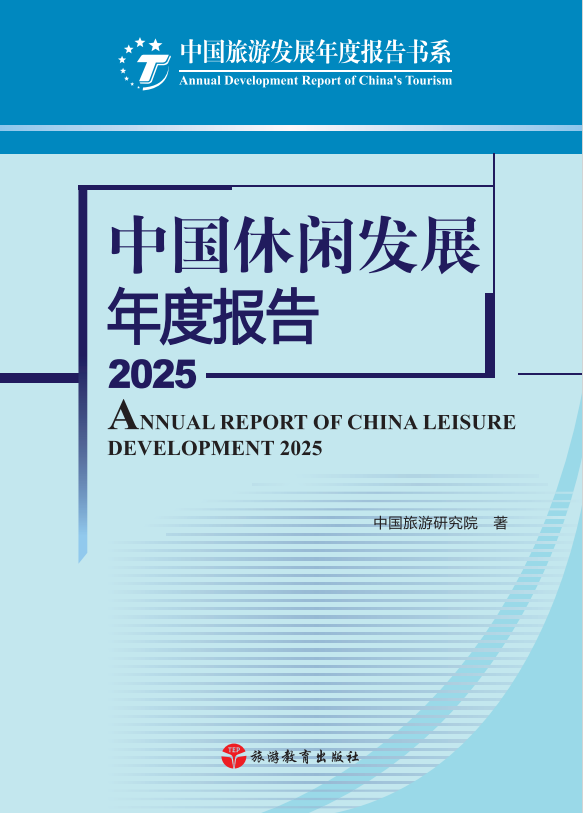
The "Annual Report on China's Leisure Development 2025", compiled by the Planning and Leisure Research Institute of the China Tourism Academy, is one of the "1 8" landmark research achievements of the China Tourism Academy. It continues the continuous tracking research that has been conducted since 2012. The report focuses on the three core dimensions of national leisure - time, space, and content - and systematically analyzes the characteristics of the year 2025. By combining the key nodes of the "14th Five-Year Plan" conclusion and the "15th Five-Year Plan" commencement, it proposes suggestions for high-quality development.
The report shows that leisure has become deeply integrated into people's daily lives, with leisure time becoming a rigid demand. Urban residents spend an average of 3.66 hours, 3.87 hours, and 3.79 hours of leisure time per day on weekdays, weekends, and holidays, respectively. Leisure spaces exhibit a significant "proximity-based" characteristic, with over 86% of urban and rural residents choosing to engage in leisure activities within a 3-kilometer radius. Culture, sports, and technology are deeply integrated, with new scenarios such as immersive experiences, light sports, and emotional consumption constantly emerging, making paying for emotional experiences a significant trend. While leisure is deeply embedded in daily life, problems such as leisure time being squeezed by work and life, a mismatch between the layout of leisure facilities and residents' needs, and a lack of high-level guidance for spontaneous public activities remain prominent. With the accelerating aging population and market penetration into lower-tier cities, the demand for leisure is growing rapidly and continuing to be released. During the crucial period of the "15th Five-Year Plan," it is necessary to systematically address the supply-demand mismatch and promote the high-quality development of national leisure.
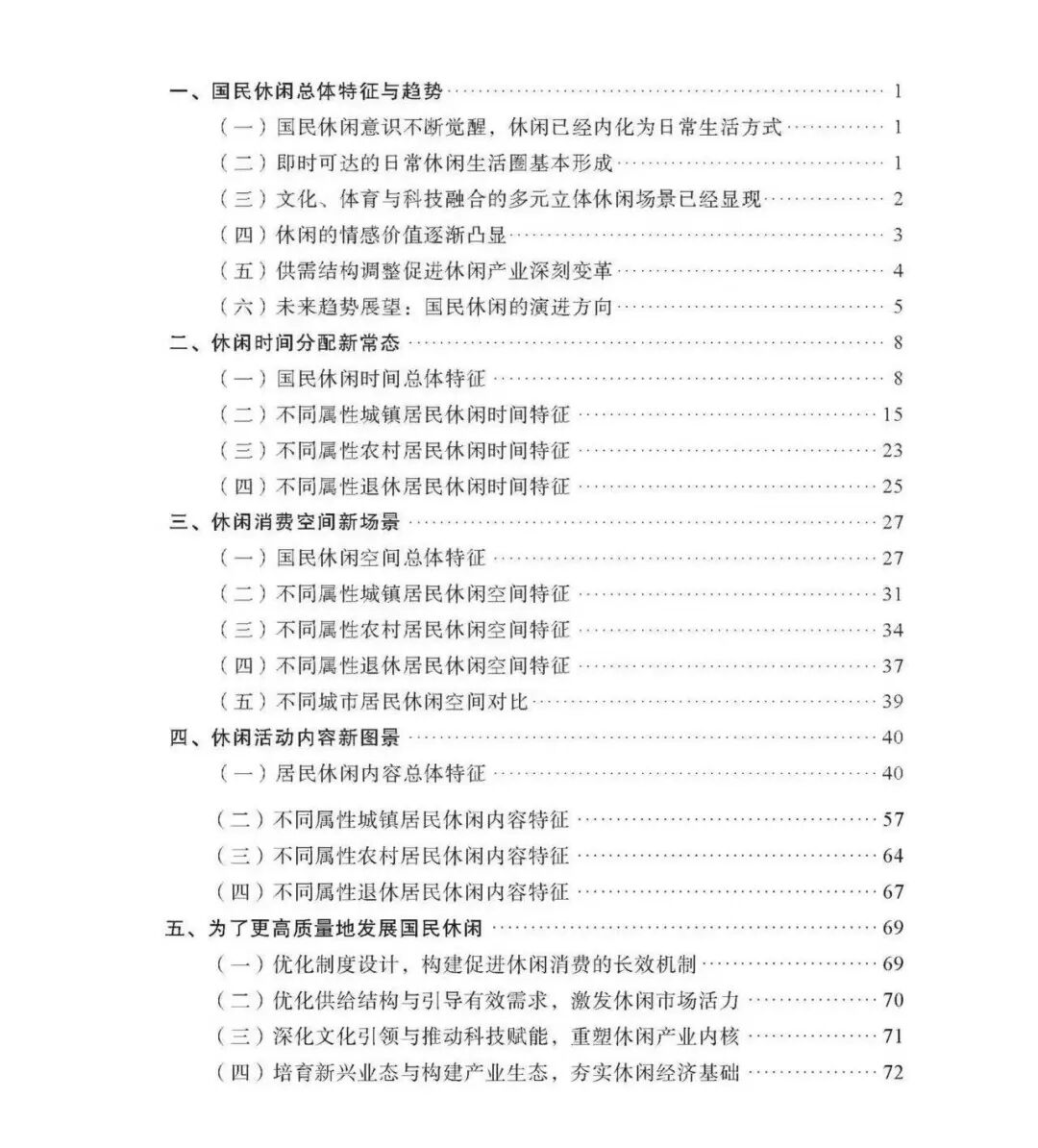
Table of Contents 000@@00
Contributor | Planning and Leisure Department Editor | Liu Xin Source | China Tourism Academy (Data Center of the Ministry of Culture and Tourism) Please indicate the source when reusing


ALL RIGHTS RESERVED:CHINA TOURISM ACADEMY (Data Center ofthe Ministry ofCulture and Tourism)
ICP备案: 京ICP备2021001490号-1


