
 简体中文
简体中文
In 2026, Labor Day and Youth Day will coincide, and multiple provinces and cities will have consecutive spring breaks, bringing more dynamic fashion and cultural atmosphere to holiday tourism. During the holiday season, most parts of the country experience spring and beautiful scenery, with a variety of cultural, artistic, intangible cultural heritage, folk art, folk festivals, scientific and technological research, and sports events. The willingness of urban and rural residents to travel is high, and various indicators of the tourism market have reached a new historical high.According to the official website of the Ministry of Culture and Tourism, in 2026, during the 5-day Labor Day holiday, 325 million people traveled domestically, with a total domestic travel expenditure of 185.492 billion yuan, an increase of 3.6% and 2.9% year-on-year, respectively.During the holiday period, tourism safety, market order, and tourism related public opinion remained stable and improved,The national tourist satisfaction score is 83.0 points, which is at a historical high level of "satisfaction"Cultural tourism drives emotional value, triggers emotional resonance, cultivates patriotism, and becomes a new engine and field of experience economy. The deep integration of culture and tourism has opened the era curtain for the construction of a tourism powerhouse during the 15th Five Year Plan period.
Cultural reshaping
Tourism Development Concept
Cultural confidence is a more fundamental, extensive, and profound confidence, which is the most basic, profound, and enduring force in the development of a country or a nation
Excellent traditional culture has always been a key element of tourism experience and tourist satisfaction, as well as the foundation for shaping the image of tourist destinations, creating tourist routes, and enhancing tourism competitiveness.The exploration of the origin of Chinese civilization project, the protection practice of Liangzhu ancient city ruins, the successful application for World Heritage status of Beijing's central axis, and the construction of national cultural parks have endowed tourist destinations with profound cultural heritage and highlighted distinct cultural characteristics for tourism routes, projects, and industries. World cultural heritage sites, national key cultural relics protection sites, archaeological site parks, museums, archives, cultural relics themed trails, and historical and cultural blocks have become the most reliable background resources for the high-quality development of cultural tourism in various regions. Guided by the principles of prioritizing protection and rational utilization, the cultural landmarks of Canruo Xingchen have always been a spatial carrier for the deep integration of culture and tourism, as well as a tourist destination that tourists linger on and forget to leave. They are also favored by the study tour and cultural tourism markets.
Tourism requires the support of elements such as food, accommodation, transportation, tourism, shopping, and entertainment. It also requires extensive participation in folk festivals and deep experiences of seasonal events to resonate emotionally with the rich land, long history, and hardworking people, and to embody the sentiment of supporting the country and the world, as well as the historical consciousness of ethnic exchange and integration. This is the original intention and essence of cultural tourism integration.During holidays, those long-standing, widely popular, and spontaneous seasonal and folk events always naturally integrate excellent traditional culture into contemporary life with a joyful attitude, becoming the most beautiful cultural scenery on the journey. The last solar term of spring, Grain Rain, the first solar term of summer, Beginning of Summer, and the following "Little Man, Little Man, Rivers Gradually Fill" all carry the 5000 years of civilization accumulation and the agricultural memories of our ancestors. From the Tomb sweeping Day, Labor Day to the Loong Boat Festival, urban and rural residents will sacrifice cars, pray for silkworms, go hiking, and taste seasonal delicacies, which is a feast of beautiful scenery and delicious food in spring. The ancient saying in Nanjing, 'Spring bull's head, autumn sunset', often attracts thousands of households to leave the city. Today, the "Guyu Festival" in Liping Dong Village, Guizhou, the "Huachao Festival" in Xinzhou, Wuhan, the "Twelve Flower Gods" horse riding parade in Qilian, Qinghai, the "Summer Mango Fragrance" in Changjiang, Hainan, the "Three Spirits Around Yunnan Ethnic Village" in Kunming, the Haitang Flower Festival on the Five Avenues in Tianjin, and the Yangzhou Beauty Festival, which combines canal culture and traditional costumes, still carry the poetic imagination of "seeing mountains, seeing water, and remembering nostalgia", and allow tourists who come from afar to have a concrete understanding of traditional festivals.
If it weren't for the poetry collectors of the Western Zhou Dynasty, perhaps we wouldn't be able to appreciate the beautiful "wind" in the Book of Songs today. Folk festivals need to be transformed from cultural elements of tourist destinations into cultural attractions that can be widely spread and attract tourists. They also need to be presented in the form of ethnic folk literature and art, and artists such as Wang Luobin, Guo Song, and Yang Liping need to immerse themselves in the fields of desert grasslands. This kind of work cannot be bought by simply entrusting a project with money, nor can it be achieved by hiring a few internet celebrities to endorse it. Only when scholars truly integrate with the earth and want to sing on their own, can there be excellent literary and artistic works, which can then be transformed into high-quality tourism products. With the help of the spread of the Internet platform, these works and products have stepped onto the historical stage of contemporary tourism development with the attitude of new mass literature and art. Spring exhibition activities such as "Village Evening", "Village Song", "Village Super", and "Village T" based on local culture have activated the local cultural genes and enriched the experiential scenes for tourists. The Changshan battle drum "Zilong Expedition" in Zhengding Ancient City of Shijiazhuang, the "March Meeting" in Mouding, Chuxiong, Yunnan, the Dong grand song in Guizhou, the Korean dance in Yanbian, Jilin, the waist drum in Yulin, Shaanxi, the flower drum lantern in Huaihe River basin, Anhui, the Yingge dance in Chaoshan, Guangdong, and the Loong Boat race in Dawan District are all examples of the activation of national and folk cultural heritage. The Mu'nao Song, which returned twice during the holiday period, attracted many tourists to Dehong, Yunnan, making Yingjiang a county sample of holiday cultural and tourism integration. It also showed us the infinite possibilities of cultural and tourism integration in early May summer. When ethnic and folk literature and art become a way of life passed down from generation to generation by local residents, and when tourists from foreign countries integrate into it with a solemn rather than frivolous, sharing rather than disturbing attitude, the significance of cultural exchange and civilization mutual learning in tourism can be highlighted, and the unpleasant incidents caused by physical conflicts during the Water Splashing Festival can be avoided.When local governments implement the people-centered public cultural concept, when investors and operators have a genuine respect for ethnic and folk culture, and work together to create a new space for cultural experience and a new scene for tourism consumption shared by hosts and guests, they will not only have a superficial taste of culture and art, but also be able to solve the dilemma of imitation and plagiarism of "wanting your wind blowing everywhere".
The transformation of intangible cultural heritage from cultural attractions to tourism consumption requires government coordination, collaborative efforts between cultural institutions and tourism enterprises, and the integration of the functional value of contemporary life and the emotional value of cultural creativity.In recent years, thanks to the institutional arrangements of "intangible cultural heritage workshops" and the growth of the Hanfu travel photography market, traditional embroidery and textile crafts such as Su embroidery, Hangluo, Xiang embroidery, Chuanbei Qiang embroidery, Huangzhong pile embroidery, Fanzhi Jin embroidery, and Shuanglin silk have the possibility to once again integrate into contemporary life. These intangible cultural heritage works and cultural products, which carry the millennium memory of Chinese civilization, have encountered the world after the baptism of industrialization and commercial civilization in the new era of comprehensive development of mass tourism. They have also encountered "Made in China" and "Chinese Services", inadvertently opening the door to "Shopping in China". These intangible cultural heritage works, which combine handmade quality and historical heritage, once transformed into tourism products that integrate commemorative, experiential, and functional elements, will greatly stimulate tourists' spontaneous purchasing enthusiasm and form the traditional support of the modern tourism industry system. From Guizhou Kaili Embroidery and Taotao, Dali Bed Sheet Factory Art Zone, Dunhuang Night Market, Jingdezhen Taoxichuan, Xi'an Shuyuanmen Pedestrian Street, to Zhuhai Beishan Courtyard, Xiamen Ba Shi, Shenzhen Longhu East Second Market, Beijing Xihongmen, when traditional intangible cultural heritage enters rural markets and urban markets, it greatly enriches the spatial carrier of cultural tourism integration and silently cultivates localized innovative entities. In fact, whether it is culture, art, commerce, sports, or tourism, what kind of integration and evolution is not based on life, and is tested by history, promoted by the times, and shared by the people?
"Chinese path to modernization is a modernization in which material civilization and spiritual civilization are coordinated. We should carry forward the excellent traditional Chinese culture, make good use of red culture, develop advanced socialist culture, and enrich the people's spiritual and cultural life."Red culture is an advanced culture created and accumulated by the Chinese people under the leadership of the CPC in the great practice of revolution, construction and reform, which contains rich revolutionary spirit and profound historical and cultural connotation.Developing red tourism, inheriting and promoting red culture, is the strategic orientation of tourism development in the new era, as well as the value orientation of studying tourism and national education.When Labor Day meets Youth Day, holiday tourism plays the main melody of youth and struggle. Sichuan has launched the "Striving Youth" tourism route that connects the Long March Snow Mountain with the nuclear industry base, and young red tour guides from Jiaxing, Zhejiang are using flash mobs to share the "Red Boat Spirit" with tourists. Youth from Guizhou, Sichuan, Hebei and other regions actively participate in red tourism routes and experience projects such as "Red Fragrance · Reflection of Original Aspiration", "Long March Monument · Struggle Road", and "Planning and Strategy · Taihang Fireworks". During the holiday period, red tourism attractions such as the former residence of Li Dazhao in Beijing, the Unknown Heroes Square in Xishan National Forest Park, the site of the First National Congress in Shanghai, the Red Boat in Nanhu, Jiaxing, Ruijin, Jiangxi, the starting point of the Long March in Yudu, the Yan'an Revolution Memorial Hall, the 129th Division Memorial Hall of the Eighth Route Army in Handan, the New Fourth Army Memorial Hall in Yancheng, the Xibaipo Memorial Hall, and the Shenyang Anti US Aid Korea Martyrs Cemetery welcomed many visitors.
Classic red tourism performances such as "Ten Farewell to the Red Army," "Yan'an Nursery," "Hongze Lake 1942," "Red Detachment of Women," and "Me and My Red Safety," as well as new productions such as the immersive situational acrobatic drama "Red Flag Piercing the Presidential Palace" created by the Nanjing Acrobatic Troupe, have brought red culture to life and integrated it into the heart. The vast number of young people continue the historical context in the study of the Red Revolution, experience the great changes in the country through science and technology industry tours, and participate in holiday service guarantees through volunteer service. They have begun to shift from "I have been" and "I have experienced" to "I understand" and "I am responsible". At this moment, the political, cultural, and ideological attributes of tourism have become concrete, and contemporary tourism has become a spiritual pursuit related to national identity and identity shaping. Tourism can provide tourists with diverse emotional values, emotional resonance, and cultivate patriotism for young people. The cultural and tourism system and industry must adhere to the development direction of socialist core values leading the integration of culture and tourism, allocate more energy and resources to the creation of excellent literary and artistic works, the research and development of high-quality tourism products, and the improvement of services, and reduce the use of various internet celebrities, celebrity endorsements, and marketing campaigns.To promote high-quality development of the tourism industry, we must be vigilant about the prioritization of traffic in the process of tourism development in various regions, and we must not let tourism become a breeding ground for low-quality traffic.
Cultural enhancement
Tourism competitiveness
General Secretary Xi Jinping pointed out that,In places with well-developed culture, the economy still leads the way. We can study the humanistic economics in this area. We must uphold openness and inclusiveness, adhere to the sinicization and modernization of Marxism, inherit and develop excellent traditional Chinese culture, promote the localization of foreign cultures, and continuously cultivate and create socialist culture with Chinese characteristics in the new eraThe advanced socialist culture carries the Chinese dream of national rejuvenation and people's happiness. It is the strength of Chinese path to modernization, the value system of shaping the overall development of mass tourism, and the ideological and spiritual power to promote the high-quality development of tourism and build a tourism power. Urban and rural areas require a continuous cultural heritage, as well as a thriving cultural creation. The wheels of history roll forward, and we always have to look forward instead of always looking back. Culture is like this, technology is like this, and so is tourism. More super projects, large-scale scientific installations, ecological and environmental protection projects that reflect the achievements of socialist construction, reform and opening up, and the development and construction of the new era, together with the red tourist attractions of the revolutionary war era, constitute the red scenic line of holiday tourism.
The scientific and technological innovation research and development institutions in the fields of advanced manufacturing, artificial intelligence, and aerospace, as well as the application of their achievements, have become the new image of urban tourism.We have seen robots competing in marathons with humans in Yizhuang, Beijing, unmanned AI buses officially operating in Qianhai, robots and police patrolling the streets together in Shenzhen, and major scientific installations such as Tianfu Avenue, Hefei's "Science and Technology Spring Festival Gala", "Quantum Avenue" and "Artificial Sun" in Chengdu have become new images of urban tourism. We also see that post-95s and post-00s are becoming participants and innovators in the era of artificial intelligence and new mass art, and we also see the beginning of a new era of deep integration between culture and tourism.
The creative achievements of stage art, film and television works, literary innovation, "two new forms of literature and art", and new popular literature and art are becoming new driving forces for integrated development and entrepreneurial innovation.If we say that the "golden decade" of inbound tourism in the 1980s ate the resource dividends of natural and cultural heritage, and the primary stage of mass tourism ate the stock dividends of the domestic market, entering a new stage of comprehensive development of mass tourism and a new era of tourism power, the high-quality development of the tourism industry relies on the new momentum of technology and culture. If traditional scenic spots, theme parks, and tourism performances continue the visual impact model of installations and group performances, their business models will be difficult to sustain. To adapt to this change, the cultural and tourism system will launch a series of tourism themed days and months in May, titled "Enjoying Quality Tourism and Embarking on Beautiful Mountains and Rivers Together". As the main venue of China Tourism Day on May 19th, Guangzhou will create a cultural festival that integrates Lingnan culture such as Guangdong music, Cantonese opera, English song and dance, and modern light and shadow technology. Governments at all levels and in the tourism industry should promote integrated, ecological, and intelligent development, guided by high-quality and sustainable development. They should also adhere to the cultural mission of cultural confidence, openness, inclusiveness, and innovation in the new era, rather than letting the tourism industry only serve as a commercial platform and cater to tourists' emotional consumption and entertainment needs without principles. If it weren't for this, where would we place the sentiment of "scholarly passion for studying, travel to our country and the world" and "for the good life of tourists, for the professional dignity of tourists"? How can we return to the classic value of tourism and improve modern tourism? History has proven and will continue to prove,Tourism without culture cannot go far, and the tourism industry without values and values cannot stand high.
In recent years, popular TV dramas such as "Silent Glory," "Eight Thousand Miles of Clouds and Moon," "Wind and Tide," and "Taiping Year" have attracted a large number of tourists to visit the filming and story locations. After the excellent literary works "My Altay" and "Right Bank of the Erguna River" became popular, they effectively enhanced the tourism attractiveness of ethnic regions such as Altay and Erguna. The Wuqiao Acrobatics and Fantasy Music City in Cangzhou has effectively amplified the tourism effect of traditional folk arts, with more mass sports events and cultural activities such as Su Chao, Xiang Chao, Zhejiang BA, marathons, concerts, concerts, etc., attracting tourists from afar. Chengdu hosts more than three concerts every day, including symphonies, ethnic music, choir performances, and more. It is worth noting that the art week initiated by private art museums such as the A4 Art Museum in Luzhen, the drama week led by the Anaya Modern Art Museum, the "Four Landscapes" of the Lei Dong Tian Xia Modern Dance Troupe, the Nine People Drama Troupe, and the Contemporary Drama Biennial have become successful practices of mass art education for citizens and tourists. The Youth Drama Festival in Anqing Ancient City, which combines Huangmei Opera and modern drama, attracted 519000 tourists during the holiday period to experience the cultural heritage of the "theatrical" city. Influenced by the aforementioned cultural institutions and art groups, various regions have begun to intentionally or unintentionally cultivate new cultural landmarks. Once these new cultural landmarks are formed, they will have an unbreakable impact on traditional tourism resources in the short term, which cannot be ignored.
Culture is also an intrinsic force that attracts inbound tourists to visit, identify with, and satisfy them.According to location big data monitoring,During the labor holiday period, a total of 2.4336 million inbound tourists were received, a year-on-year increase of 7.4%. Among them, 544400 inbound foreign tourists were received, a year-on-year increase of 9.8%With the continuous release of visa, consumption, and payment facilitation effects, more foreigners are coming to China. Traditional landscapes, forests, fields, lakes, grasses, sands, historical relics, and cultural heritage are still classic tourist scenes. Modern transportation infrastructure, a complete public service system, open public spaces, and especially the socialist advanced culture integrated into contemporary life are the deep motivations for experiencing China, experiencing China, purchasing in China, and even becoming Chinese. During holidays, it has become an irreversible trend for mainland residents to walk outward and travel westward, for Hong Kong and Macau residents to walk inward and international tourists to look eastward.During labor holidays, Chinese citizens traveled abroad 2.4774 million times, a year-on-year increase of 8.7%.Affected by rising oil prices and geopolitical policies, some tourists planning to leave the country have turned to the domestic tourism market. From domestic and international public opinion data, outbound tourists are becoming increasingly indifferent to the economic and social development and cultural construction of various countries and regions. Cultural exchanges and mutual learning of civilizations that are equal, free, open, and inclusive are becoming more common.
Culture leads
Building a Strong Tourism Nation
General Secretary Xi Jinping pointed out that,Green mountains and clear waters are as valuable as mountains of gold and silver. Ice and snow are also as valuable as mountains of gold and silverIn the process of Chinese path to modernization in which material civilization and spiritual civilization are coordinated, China has gradually explored a path of common development and prosperity of culture, tourism and economy.
The continuous monitoring of the "Seven Festivals and Four Seasons" tourism flow for many years has shown that the size of urban population, the level of economic and social development and cultural construction, the advantages of transportation location and the degree of infrastructure improvement, the development of commercial systems and classic tourism formats such as travel agencies, tourist attractions, and tourist hotels have always been the determining factors for the flow of tourist sources and traffic. When waves of internet celebrities, popular products, and breaking circles recede, we will see the hard riverbed that determines the passenger flow vector and destination development pattern. The proportion of tourists who choose cultural science popularization tours, entertainment consumption, night tourism, food check-in and other characteristic tourism consumption during labor holidays are 34.2%, 32.5%, 27.4%, and 32.6%, respectively.
During the holiday period, the average travel radius of tourists nationwide was 197.45 kilometers, and the recreational radius of tourist destinations was 22.58 kilometers, an increase of 0.5% and 1.5% year-on-year, respectively. 66.1% of tourists chose self driving, of which 37.3% chose the mode of transportation of airplane/high-speed rail+ground self driving. 31.9% of tourists travel a distance of over 300 kilometers, and 10.0% of tourists travel for more than 5 days.The provinces with the highest output of tourist sources include Guangdong, Henan, Shandong, Sichuan, Jiangsu, Hebei, Hunan, Hubei, Anhui, and Zhejiang. The provinces with the highest tourism reception volume include Guangdong, Jiangsu, Shandong, Sichuan, Henan, Hebei, Zhejiang, Hubei, Hunan, and Anhui.The cities with the highest tourist reception volume include Chongqing, Beijing, Chengdu, Shanghai, Guangzhou, Wuhan, Shenzhen, Xi'an, Hangzhou, Changsha, Tianjin, Zhengzhou, Suzhou, Nanjing, Shijiazhuang, Shenyang, Harbin, Hefei, Kunming, and Jinan.If we overlay demand side data such as tourist travel direction, scale, and proportion of self driving trips onto civil aviation stations, routes, and flights, high-speed rail stations, route maps, and train numbers, as well as highway networks and city maps along the route, we will have a deeper understanding of holiday tourism data.
Tourist attractions and vacation areas remain classic tourist spaces, while historical and cultural blocks, leisure business districts, and all other public spaces that carry people's beautiful lives will become experience scenes shared by hosts and guests. According to a special survey, 59.9% of tourists went to tourist attractions during holidays, 43.0% and 31.9% of respondents chose tourism and leisure districts and urban business districts, while the proportion of choosing urban parks, resorts, and cultural and museum venues was 25.6%, 24.5%, and 23.2%, respectively. The top tourist attractions in terms of visitor reception includeHangzhou West Lake, Nanjing Confucius Temple Qinhuai River, Nanjing Zhongshan, Jinhua Hengdian Film and Television City, Wuhan East Lake, Tai'an Mount Taishan, Suzhou Jinji Lake, Jiujiang Lushan, Dali Old City, Xi'an Datang Lotus Garden, Kaifeng Qingming Shanghe Garden, Guangzhou Baiyun Mountain, Dalian Jinshitan, Chengdu Qingcheng Mountain Dujiangyan Irrigation Project, Beijing Olympic Park, Pingyao Ancient City, Qingdao Laoshan, Xiangxi Phoenix Ancient City, Chizhou Jiuhua Mountain, the Old Town of LijiangWait. The tourism and leisure blocks in front of tourist reception includeLuoyang Ancient City, Changsha Taiping Street, Changchun Hongqi Street, Shenyang Middle Street, Haikou Arcade, Chengdu Chunxi Road, Hangzhou Qinghefang, Suzhou Ligong Dike, Guangzhou Yongqing Square, Chengde Jinlong, Mudanjiang East 1st Street, Kaifeng Drum Tower, Quanzhou Zhongshan Road, Longyandiantou Street, Chaozhou memorial archway Street, Hohhot Saishang Old Street, Xinzhou Xinfu Ancient City, Suzhou Pingjiang, Jinan Baihuazhou Street, Wenzhou Wuma StreetWait. Sports events such as "Su Chao," "Chu Chao," and "Gan Chao" continue to drive up the popularity of surrounding tourism, and characteristic leisure blocks, commercial districts, and shopping centers have become new scenes for the integration of culture, business, and tourism. The heartwarming measures of public tourism services in various regions directly reach tourists. A billboard is erected in the Jinzhou government compound, inviting tourists to park and use the restroom for free; Nanjing provides cultural and tourism knowledge training for taxi and ride hailing drivers throughout the city; Wuhan University, Nanjing University of Traditional Chinese Medicine, and others have launched immersive campus exploration and cultural experiences.
Culture leads the sharing of urban leisure spaces and also drives the growth of rural cultural industries.Tourists are also creators of contemporary culture, interlocutors and disseminators of modern civilization. In the past, the group of light tourists, entrepreneurs, and travelers flowed from big cities to small and medium-sized cities, counties, and traditional villages, marking the beginning of cultural migration in the new era. While enjoying beautiful scenery, comprehending history and culture, and sharing a wonderful life, tourists also bring a new perspective and modern way of life to their destination. Whether it is a short-term stay or a medium - to long-term residence, it has opened a "window" to the outside world for the permanent residence. Especially those cultural tourism projects that integrate technology, culture, and artistic genes provide high-quality employment opportunities and lifestyles for young people returning home. These projects are spreading and growing like sparks around transportation hubs such as suburban counties and airports around major cities. The "Baiyuan Xingcun" plan in Shuangliu District, Chengdu provides a beautiful lifestyle for citizens and tourists, including beautiful culture, goods, food, and accommodation. It also makes institutional arrangements for the cost-benefit of investors, project managers, village collectives, and farmers. These vast museums scattered in the courtyards and fields of the village, like ink paintings, make visitors suddenly feel the nostalgia of "flowers blooming on the road, slowly returning home". During the holiday season, the proportion of tourists choosing destinations in big cities, small and medium-sized cities, county towns, and rural areas was 29.2%, 63.9%, 27.7%, and 16.4%, respectively. The heat intensity of destinations such as Cicheng in Zhejiang, Wulong in Chongqing, Pingyao in Shanxi, and Jianshui in Yunnan increased significantly.
The increasing demand for travel and consumption upgrading among rural residents has brought new possibilities for the development of rural tourism with Chinese characteristics. During the holiday period, the travel rate of rural residents in China was 10.1%, with 45.6531 million people traveling, accounting for 14.0% of the total number of domestic tourists traveling during the holiday.Urban residents go to the countryside for leisure and vacation, while rural residents go to the city for sightseeing and tourismThe new market pattern forces both the theoretical and practical development of tourism to prioritize the protection of tourism rights, including those of rural residents. In any case, the rational light of inclusive tourism will eventually shine into the process of Chinese path to modernization, and converge into the development consensus and spiritual strength of tourists, tourists and the tourism industry, leading the direction of the new stage of comprehensive development of contemporary tourism. It is the conscious recognition of culture and the responsibility for civilization that continuously improves the satisfaction of tourists during holidays, while the rationality of civilized tourism is also increasingly evident.
The socialist advanced culture that attracts tourists to visit and shapes the image of urban and rural tourism also includes the culture that embodies socialist moral standards advocated by socialist core values, as well as the good moral customs and spiritual civilization achievements formed in social practice. They may be systemically sorted and promoted, or spontaneously spread through the Internet. The video of college students spontaneously guarding the pancake vendor in Wuhan has gone viral online, allowing tourists to truly feel the friendliness of the citizens. It is more touching than the slogans of the "four six battle" that are heavily promoted through advertising.If every effort made by the government can be felt by tourists, then every goodwill released by citizens can bring direct warmth to tourists' hearts.
The 15th Five Year Plan has begun, and a new era has arrived in which culture leads the construction of a strong tourism country.
Author | Dai Bin
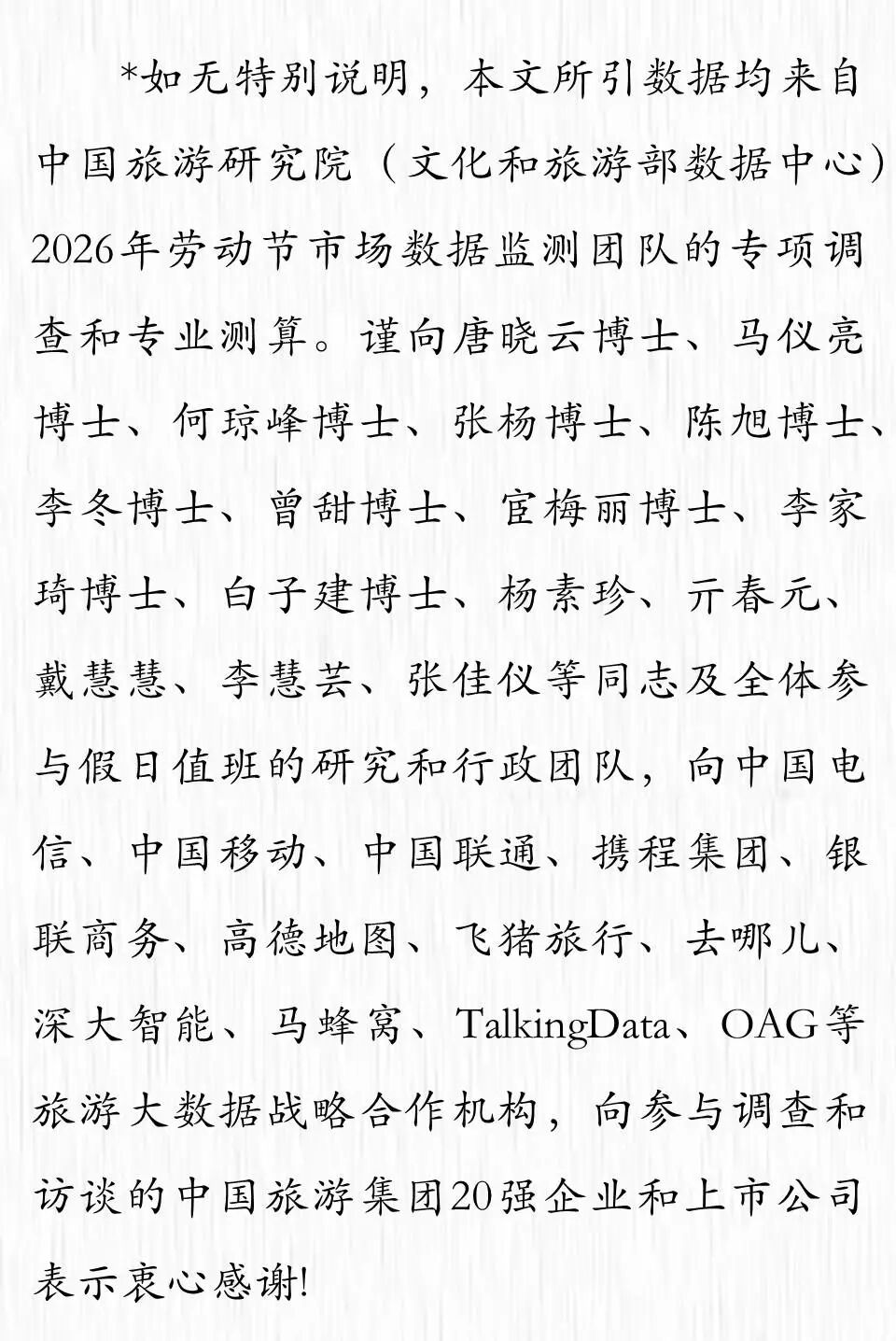
Source | China Tourism Research Institute (Data Center of the Ministry of Culture and Tourism)
Please indicate the author and source when reprinting


ALL RIGHTS RESERVED:CHINA TOURISM ACADEMY (Data Center ofthe Ministry ofCulture and Tourism)
ICP备案: 京ICP备2021001490号-1


