
 简体中文
简体中文
On December 28-29, 2012, the annual work meeting of peripheral research institutions of China Tourism Academy was successfully held at the Tourism Security Research Base of China Tourism Academy (Huaqiao University). The theme of the annual meeting was "Professional Spirit and Social Service". Nearly 300 people including representatives from 12 research bases, representatives from 10 observer units, and teachers and students of Huaqiao University attended the annual meeting. China News Service, China Tourism News, Straits Herald, Quanzhou Evening News, Quanzhou TV Station, Southeast Network and other media covered this meeting. On the afternoon of the 28th, a symposium on the work summary of peripheral research institutions in 2012 and the work plan for 2013 was held. The meeting was chaired by Xia Shaoyan, head of the scientific research department of the China Tourism Academy. Two branches and 10 peripheral research bases, including the tourism safety research base, conducted annual work summaries and discussions around base organization construction, academic research, social services, etc. Outlook of the 2013 work plan, and in-depth discussions on measures to further promote the development of research bases and social services. According to statistics, this year the 12 external research institutions of the China Tourism Academy published nearly 30 monographs and textbooks in their respective tourism disciplines, published nearly 170 academic papers, and undertook nearly 120 projects of various types at all levels, providing social services. Nearly 70 projects.
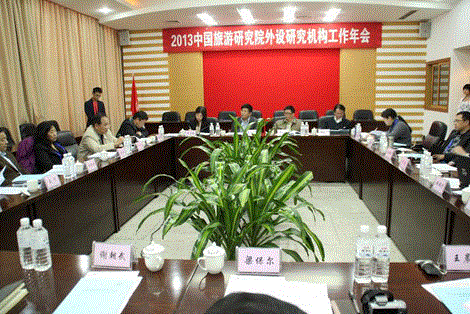
At the meeting, Professor Jiang Ruoyu of Kunming Branch made a speech on the work summary of 2012 and the work plan of 2013. According to the introduction, in 2012, Kunming Branch carried out the compilation and research of "Yunnan Tourism Decision Reference", participated in the revision of "Yunnan Tourism Regulations" and "Yunnan Top Ten Historical and Cultural Tourism Construction Projects", "Kunyu Cultural Tourism Industry Belt Construction Project", Xishuangbanna Research, Provincial CPPCC carried out "Building Brand, Adjusting Structure, Promoting Development" special research and other planning and research projects, and completed the compilation of "Yunnan Tourism Industry Development Annual Report (2011-2012)". In 2013, Kunming Branch plans to further clarify the purpose of the establishment of the institute, strengthen the functions of the "two institutes", and focus on tourism normal research, tourism academic community, planning consortium and internal construction.
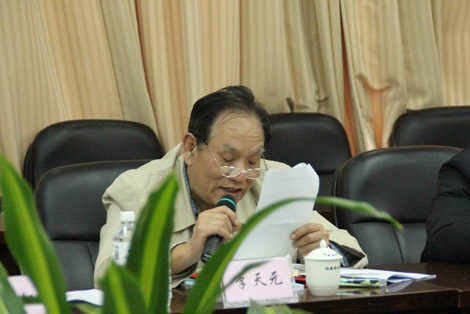
Professor Li Tianyuan of the Tourism Market and Destination Marketing Research Base pointed out in his work summary and plan speech that in 2012, the Tourism Market and Destination Marketing Research Base established a special research team, built a tourism market research laboratory, and took the lead in organizing the 2012 Nankai Tourism International Academic Seminar: held the Nankai University Second International Tourism Academic Seminar and "Biweekly Forum" and other academic activities, built a daily scientific research exchange platform for the college, and built the "Tourism and Service Research" internal journal. In 2013, it is planned to strengthen external exchanges, actively organize and organize the Sino-US Tourism Research Seminar: actively connect with the Rosen School of Hotel Management at the University of Florida to explore the holding of the Sino-US Tourism Destination Research International Seminar; give full play to the experimental and teaching functions of the "Tourism Market Laboratory"; continue to expand the influence of the "Tourism and Service Research" internal journal, and aspire to become a leader in domestic tourism academic research topics, research methods and research explorations; complete a number of key demonstration tourism destination strategies and marketing plans, etc.
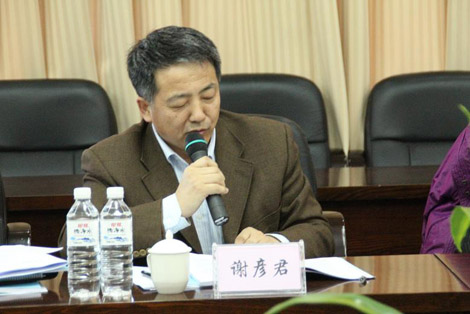
Professor Xie Yanjun of the Tourism Basic Theory Research Base introduced that in 2012, the base focused on the working idea of "deepening basic theory research and promoting the integration of industry, academia and research", and mainly completed three aspects of work: further deepening the research on tourism basic theory, actively expanding new directions based on the direction of tourism experience characteristics; further promoting the integration of industry, academia and research, and making some new progress in vertical and horizontal research projects, building a new platform for the application of basic theory research to industrial practice; and actively building a reasonable academic echelon. In 2013, the Tourism Basic Theory Research Base will further expand and deepen the research on tourism basic theory; further promote tourism industry, academia and research; further better cooperate with the various research work of the China Tourism Academy, further strengthen academic communication with domestic tourism research institutions and sister colleges, further strengthen in-depth cooperation with local governments and tourism enterprises, and further strengthen the grasp of the dynamics of international tourism basic theory research.
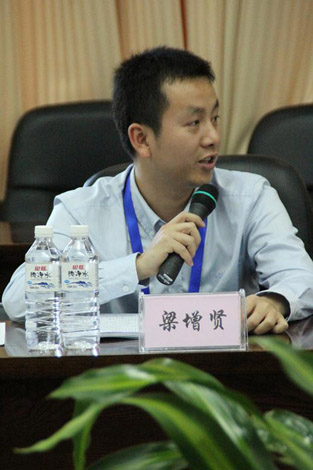
Dr. Liang Zengxian of the Tourism Impact Research Base introduced that in 2012, the base successively built research bases in Yangshuo, Xishuangbanna, Zhangjiajie and other places to conduct long-term follow-up research on tourism impact; innovated and improved research topics, enhanced the internationalization of research results, increased the number of high-quality English papers, and strengthened international academic exchanges. In 2013, it is planned to continue to promote the internationalization process, deepen the cooperation between industry and government, actively explore new research topics and research paradigms, and encourage and support young scholars to conduct innovative research and challenges.
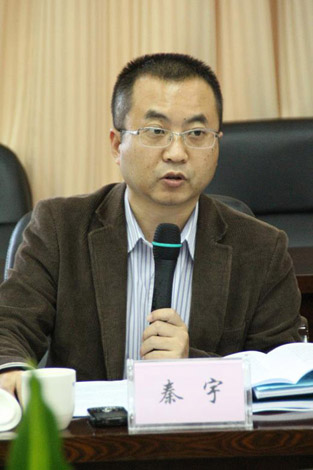
Professor Qin Yu of the Hotel Industry Research Base made a speech on the work summary of 2012 and the work plan of 2013. In 2012, the base published many high-quality papers in scientific research, undertook several vertical and horizontal projects, and formed a number of innovative and significant scientific research results in China; in academic activities, actively participated in international and domestic academic activities; in social services, helped the China Tourism Hotel Association, the Education Branch of the China Tourism Association, the Beijing Municipal Tourism Commission and other institutions to complete corresponding research work; in talent training, actively cooperated with enterprises, provided consulting services for enterprise development, held manager training courses, and created a large number of research opportunities for graduate students. In 2013, it is planned to further deepen existing scientific research activities and improve the level of scientific research results; actively plan new scientific research activities: do some exploratory work in "hotel consumer purchase and consumption behavior survey" and "Chinese hotel management cases", conduct in-depth research on new hotel formats such as resort hotel management and hotel complexes, and increase research on the detailed hot spots and difficulties of hotel human resource management; continue to do a good job in social services: provide services to the industry through consulting and lectures, and complete the tasks entrusted by the National Tourism Administration and other departments with quality and quantity.
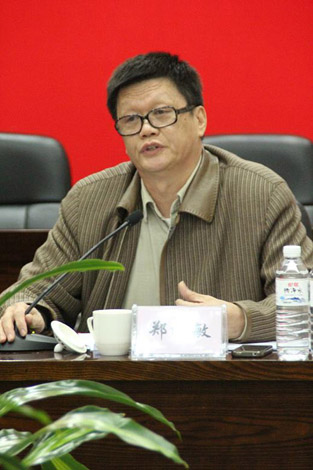
Professor Zheng Xiangmin of the Tourism Safety Research Base introduced in his speech that in 2012, the base strengthened the construction and integration of the tourism safety talent team and introduced doctors in the field of safety engineering and technology; strengthened the research and publication of landmark achievements in tourism safety, and published the "Tourism Safety Blue Book" and "Tourism Safety Practical Management Training Series"; strengthened the project establishment and management of the Tourism Safety Base, and obtained 3 national social science projects and doctoral projects of the Ministry of Education in the field of tourism safety; actively promoted the social services and targeted academic exchanges of the Tourism Safety Research Base, and was invited to give tourism safety lectures in Haikou City, Hainan Province, Anhui Provincial Tourism Bureau, Beijing, and Changsha. In 2013, the base plans to strengthen the construction of the scientific research platform of the tourism safety base: try to establish a scientific research workstation or observation station on the research platform to obtain continuous and stable research information and enhance the information basis for serving tourism safety practices; strengthen strategic cooperation with relevant domestic institutions: strengthen strategic cooperation with relevant institutions such as Tsinghua University Public Security Research Institute, and promote business exchanges and cooperation with insurance industry institutions such as Jiangtai Insurance; strengthen team building of the research base: introduce doctoral talents in the fields of safety science and engineering, systems engineering, food safety and engineering; do a good job in publishing the "Tourism Safety Blue Book" series; strengthen project management and social services; build a tourism safety and insurance doctoral mobile workstation, a tourism science and technology laboratory, and a third-party tourism safety evaluation agency.
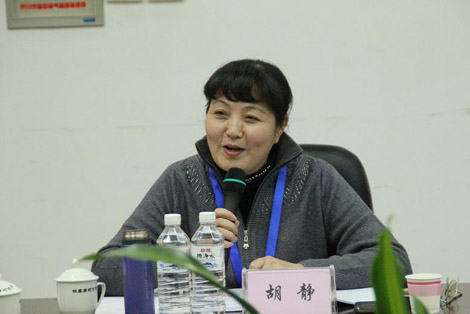
Dean Hu Jing of the Wuhan Branch introduced that in 2012, the Wuhan Branch optimized the branch atmosphere and established a research team; relying on the branch platform, it produced a number of academic achievements, compiled and published the "2012 China Tourism Development Report", and published more than ten high-quality academic articles paper; leveraged the advantages of the branch to build a "China Tourism Spatial Information Database"; focused on social services and completed a number of scientific research projects; strengthened international cooperation, successfully held a Sino-Canadian cross-cultural tourism seminar, and co-organized the "2012 Chinese Human Geography" Academic Annual Meeting". In 2013, we plan to consolidate the existing research foundation, complete the "2013 China Tourism Development Report", build a more innovative team and collaborative innovation mechanism; further accelerate the internationalization process, participate in international tourism research and practice; strengthen informatization construction, and establish Internet-based "China Tourism Data Release System"; actively explore and build a trinity cooperation model between government, industry and research.
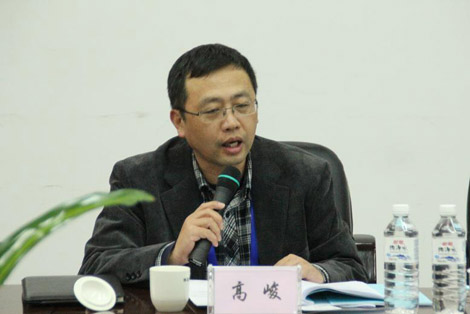
Professor Gao Jun of the Urban Tourism Research Base made a speech on the work summary of 2012 and the work plan of 2013. In 2012, the base obtained two National Natural Science Foundation projects; the "Research on the Tourism Development Planning of the Yangtze River Delta Region" was passed by the expert review meeting of the National Tourism Administration; the industry standard "Urban Tourism Public Service Requirements", the overall tourism development plan of Dingri County, Tibet Autonomous Region, "Asia-Pacific Urban Tourism Development Report", "Hangzhou Tourism Internationalization Special Research" and so on were compiled and completed. In 2013, it is planned to publish "Shanghai Tourism Resources Atlas", expand international cooperation and exchanges in tourism research, and actively participate in the 085 connotation construction project of Shanghai Normal University "Construction of Characteristic Disciplines and Professional Groups Facing World City Development".
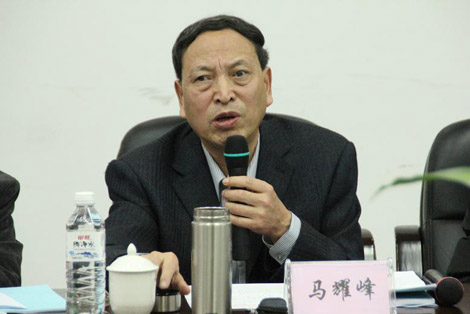
Professor Ma Yaofeng from the Western Tourism Development Research Base delivered a summary of the work in 2012 and a speech on the work plan for 2013. In 2012, the business administration postdoctoral research mobile station that the base took the lead in applying for was approved; a study on the growth of inbound tourism in the western region was completed; the "Western Tourism Development Report" will be published successfully; the flagship class of MTA Qujiang Cultural Tourism Group was successfully launched; and it has undertaken a number of tasks He has made significant progress in horizontal topics and successfully applied for a number of fund projects at all levels. He published the monograph "Research on the Development of Sightseeing Agricultural Tourism Resources in the Northern Foothills of Qinling Mountains" and published many important academic papers. In 2013, it is planned to continue to strengthen and promote scientific research work, and conduct in-depth research on tourism space theory, development and management of tourism resources in the western region, etc.; continue to strengthen social services: release the "Western Tourism Development Report" (2012-2013), and continue to recruit Qujiang Cultural Tourism Group MTA course refresher course; apply for "Grade A qualification" in tourism planning.
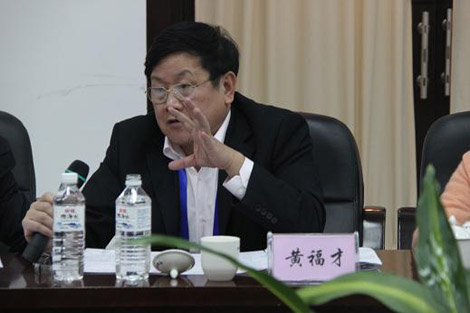
Professor Huang Fucai from the Taiwan Tourism Research Base made a speech on the work summary for 2012 and the work plan for 2013. In 2012, the base completed a number of scientific research tasks and plans, and undertook related tourism planning and planning projects in Changting County, Shanghang County, and Xiamen City, Fujian Province; published more than 10 academic papers, wrote consulting and research reports, and participated in cross-strait projects Inspection and guidance of rural tourism; actively apply for the National Natural Sciences, Social Sciences and National Tourism Administration’s Taiwan research-related topics; strengthen cooperation and contact with relevant tourism colleges and universities in Taiwan, actively participate in and organize cross-strait tourism academic conferences, and organize Xiamen University tourism MTA students went to Taiwan to study and study, cultivating high-level professionals in cross-strait tourism research. In 2013, we plan to complete the research work on approved important topics; do a good job in organizing research on Taiwan tourism; strengthen contact and communication with the Xiamen Municipal Tourism Bureau, and carry out research on the Taiwan tourism market and the impact of unexpected events on cross-strait tourism. Regular or permanent special research work; cooperate with Taiwan tourism colleges and universities to continue to conduct surveys and research on "service quality" and "impact" in Fujian and Taiwan; conduct academic exchanges with Taiwan tourism colleges and universities, and conduct cross-strait tourism interactions Database construction; participating in organizing cross-strait tourism seminars.
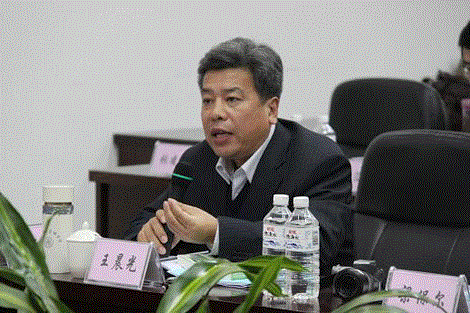
Professor Wang Chenguang of the Tourism Vocational Education Research Base made a summary of the work in 2012. The base successfully held the 2nd China Tourism Vocational Education Development Summit and "Baichuan" Forum in 2012, established the "Baichuan Innovation Salon", and passed the Shandong Province Tourism Vocational Education The group has strengthened industry exchanges. The journal "Tourism Development Research" published has been recognized by the industry. It has participated in multiple project research work of the Shandong Provincial Tourism Bureau, carried out tourist satisfaction surveys in 17 cities, and published more than 40 papers. He has published 6 monographs including "The Growth of Famous Tourism Schools", and completed scientific research projects on "Research on the Entry and Exit Mechanism of Tour Guides" and innovative practice models for cultivating tourism talents. In 2013, we plan to hold the 3rd China Tourism Vocational Education Development Summit and the "Baichuan" Forum, continue to deepen the research on "The Growth of Tourism Famous Schools", and apply for one or two key topics in tourism vocational education.
Professor Xu Yunsong of the Tourism Standardization Research Base made a summary of the work in 2012. The base completed the tasks entrusted by the National Tourism Administration and the Provincial Tourism Administration - the compilation of "Travel Agency Safety Standards" and "Tourism Emergency Handbook" (Tourist Edition), and carried out tourism standards and standardization theory and practice research: such as the revision of "Tourism Standards", the standard system and standardization implementation research of new tourism formats, etc., and carried out the construction guidance and diversified training of the National Tourism Administration's standardization pilot units, and supported the application and construction of Hangzhou's "Travel Agency Store Service Standards", "Travel Agency Safety Management Standards", and tourism industry association standards. The plan for 2013 is to establish and improve the base operation mechanism, further promote the research on tourism standard theory and standardization methods; and carry out standardization services and training.
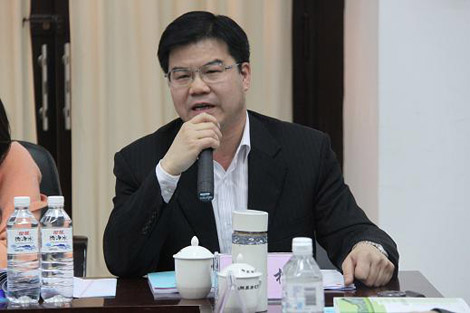
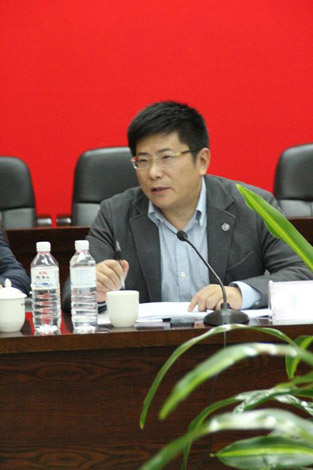
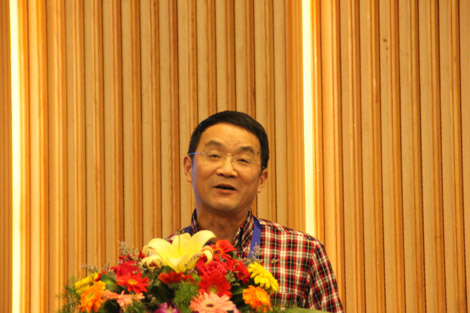
Finally, Dai Bin, President of China Tourism Research Institute, gave a special speech on the theme of "Social service is the only way for academic community growth". He pointed out that the practice of the tourism industry requires more social services from the academic community; China's tourism education and scientific research are developing in sync with the tourism industry. In the present and future periods, the development of the tourism industry will have higher, broader, and more urgent requirements for theoretical workers in higher education and research institutions. He believes that effective participation in social services is the only way for the growth of the tourism academic community with Chinese characteristics, and it is the only way for young scholars to grow and for the tourism academic community to cultivate famous masters. He emphasized that comprehensive quality and professional ability are the academic foundation for providing good social services, and hoped that the tourism academic community could form a relatively relaxed research environment, allowing more talented and potential young scholars to explore freely in as many directions as possible; I hope that the tourism academic community can advocate and practice academic ethics that are in line with human civilization and values; I hope to see more tourism universities and research institutions allocate more resources to the construction of data rooms, databases, and professional laboratories, so that society can serve the coupling and interaction between scientific research and talent cultivation, forming a stable platform and mechanism. On December 29th, the 2013 Annual Meeting of External Research Institutions of China Tourism Research Institute held an academic forum and results release, as well as a summary and award ceremony for the implementation of the CTA (Graduate) Excellence Award Program. Under the guidance of Professors Xie Yanjun, Hu Jing, Song Ziqian, and Wang Chengguang, scholars from 12 external research institutions and the Policy Institute, Industry Institute, International Institute, and Regional Institute of China Tourism Research Institute conducted in-depth discussions on four topics: "Beautiful China and Ecological Civilization Construction Leading the Sustainable Development of Tourism Industry", "Tourism Development and New Urbanization", "Implementing Paid Leave and National Leisure", and "Tourism Professional Internship and Off campus Industry Practice". Kunming Branch, Western Tourism Development Research Base, Tourism Safety Research Base, and Hotel Industry Research Base have respectively released their landmark research results for 2012. The opening ceremony of the conference was presided over by Professor Zheng Xiangmin, Chief Expert of the Tourism Safety Research Base. Professor Dai Bin, President of the China Tourism Research Institute, Ms. Sui Jun, Director of the Fujian Provincial Tourism Bureau, and Mr. Li Jimin, Secretary of the Party Committee of Huaqiao University, delivered speeches respectively.
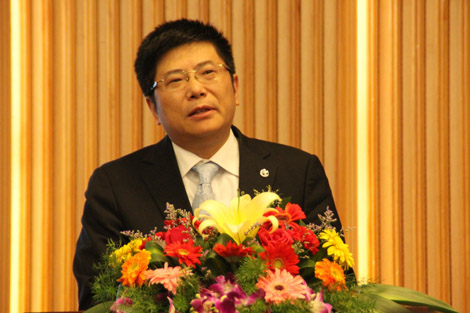 Dai Bin, President of China Tourism Academy, delivered a speech
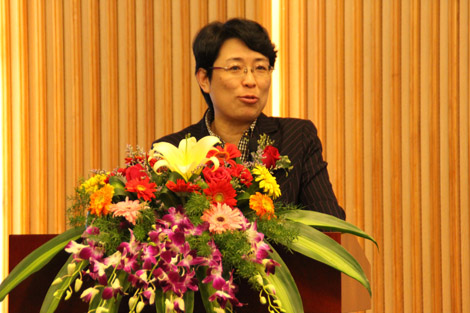 Ms. Sui Jun, Director of Fujian Provincial Tourism Bureau, delivered a speech
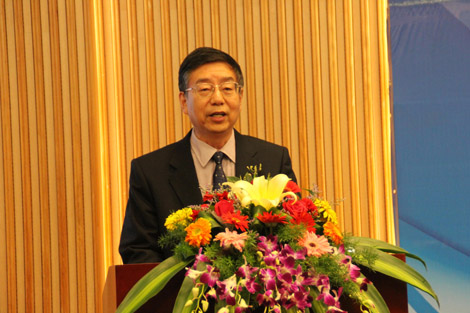 Mr. Li Jimin, Secretary of the Party Committee of Huaqiao University, delivered a welcome speech
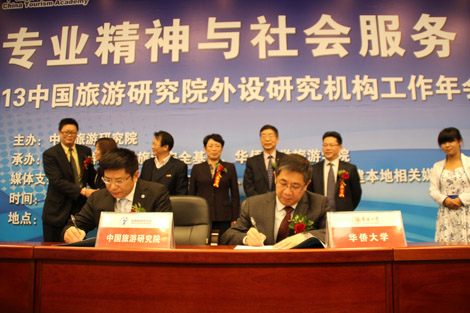
In order to promote the strategic interaction and complementary advantages between Huaqiao University and China Tourism Academy, at the opening ceremony, witnessed by Director Sui Jun, Secretary Li Jimin, Director Zhang Xikun and other leaders and guests, Dean Dai Bin and Vice President Guan Yifan signed a strategic cooperation agreement on behalf of China Tourism Academy and Huaqiao University respectively.
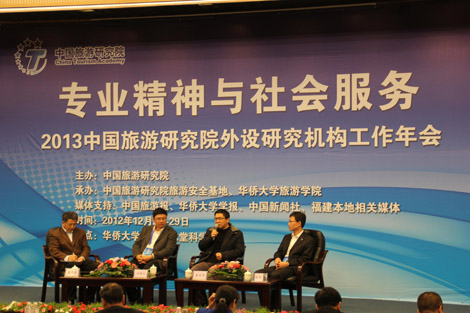
The theme of the first forum was "Beautiful China and Ecological Civilization Construction Leading Sustainable Development of Tourism Industry", which was hosted by Professor Xie Yanjun, Chief Expert of Tourism Basic Theory Research Base. Professor Bao Jigang, Chief Expert of Tourism Impact Research Base, Professor Jiang Ruoyu, Dean of Kunming Branch, and Dr. Zhang Youyin of Regional Institute of China Tourism Research Institute discussed this topic. Professor Bao Jigang called on scholars in the tourism industry to serve the society both close to the society and away from the society, and to clarify the special role of tourism in promoting the urbanization process. He believed that from large cities to small and medium-sized cities to rural areas and marginal areas, the influence of tourism is gradually increasing; Professor Xie Yanjun proposed that the function of cities should be tourism-oriented, the function of tourism should be experiential, the function of experience should be cultural, and the function of culture should be characteristic; Zhang Youyin pointed out that the proposal of Beautiful China and Ecological Civilization is both an opportunity and a new requirement, and put forward four suggestions for building Beautiful China and ecological issues. At the meeting, Professor Jiang Ruoyu released the research results of Kunming Branch of China Tourism Research Institute in 2012 - "Yunnan Tourism Industry Development Annual Report (2011-2012)".
The theme of the second forum was "Tourism Development and New Urbanization", which was hosted by Professor Hu Jing, President of Wuhan Branch. Dr. Yang Jinsong of International Institute of China Tourism Research Institute, Professor Xu Yunsong, Chief Expert of Tourism Standardization Research Base, and Professor Yan Yan of Western Tourism Development Research Base discussed this topic. Regarding this topic, Professor Hu Jing pointed out that new urbanization refers to the transition from urban-rural priority development to urban-rural coordinated (integrated) development, and agricultural sightseeing parks provide a new path for the development of new urbanization. Yang Jinsong believes that urbanization does not solve a simple development problem, but a historical restoration problem. In the context of the urban-rural dual structure, how to view the relationship between urbanization and tourism, and the relationship between rural population and tourism in the process of urbanization is crucial. In order to solve many questions, we need to understand the "family background" of urbanization in my country and the combination of urbanization and tourism development. Taking Zhejiang Province as an example, Xu Yunsong described the series of measures taken by the province to achieve urbanization through tourism, and proposed that in the process of tourism promoting rural urbanization, we must firmly grasp the "four pulses" of the countryside - industry pulse, district pulse, cultural pulse, and financial pulse. Yan Yan pointed out that the urbanization level in western my country is low, but the tourism resources are rich. Therefore, there must be new paths and ways to achieve new urbanization in western China through the development of tourism. At the meeting, Dr. Yan Yan released the landmark research results of the Western Tourism Development Research Base - "Research on the Development of Sightseeing Agricultural Tourism Resources in the Northern Foothills of Qinling Mountains".
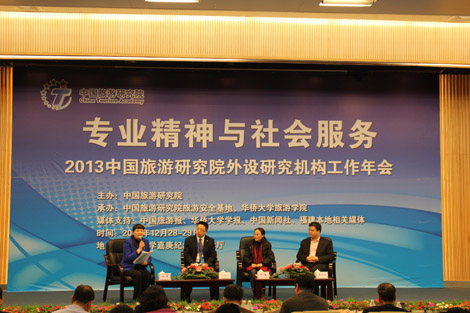
The theme of the third forum was: Implementing paid vacations and national leisure, and it was hosted by Associate Researcher Song Ziqian, Deputy Director of the Policy Institute of the China Tourism Research Institute. Professor Zheng Xiangmin, Chief Expert of the Tourism Safety Research Base, Professor Li Tianyuan, Chief Expert of the Tourism Market and Destination Marketing Research Base, and Professor Huang Fucai, Chief Expert of the Taiwan Tourism Research Base, discussed this topic. First, Professor Zheng Xiangmin, Chief Expert of the Tourism Safety Research Base, released the 2012 research results---Tourism Safety Blue Book.
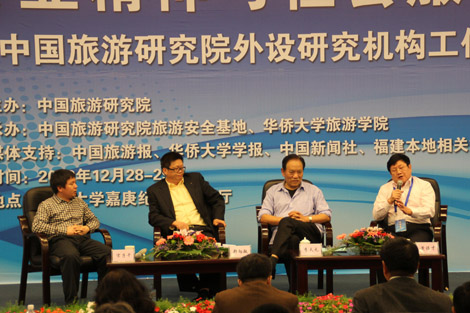
In response to the question introduced by the host, "Is it time for the issue of paid vacation and national leisure to be regulated by national policies and regulations?", Professor Li Tianyuan pointed out that due to different perspectives on the issue, there are certain differences in understanding between the society and the tourism industry, and explained the cognitive gap between the two from professional and non-professional perspectives; Professor Huang Fucai analyzed the relationship between the development of the leisure economy and tourism, and the relationship between the Golden Week and paid vacation; Zheng Xiangmin discussed the difference and connection between tourists' leisure in tourist destinations and leisure in the local area, and expressed his own views on the safety hazards of the Golden Week. In response to the "four views put forward by different industries and academia on the compilation of the National Tourism and Leisure Outline": shortening working hours, extending public holidays, implementing the paid vacation system, and social welfare subsidies", Zheng Xiangmin and Li Tianyuan agreed that the implementation of the paid vacation system would help develop national tourism and leisure, while Huang Fucai was more inclined to choose to promote the development of national tourism and leisure through social welfare subsidies.
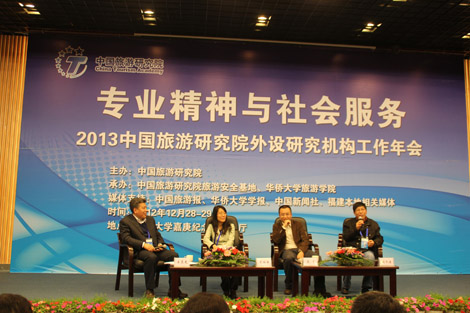
The theme of the fourth forum was "Tourism Professional Internship and Off-campus Industry Practice", which was hosted by Professor Wang Chenguang from the Tourism Vocational Education Research Base. Associate Researcher Wu Liyun from the Industry Institute of China Tourism Research Institute, Professor Qin Yu from the Hotel Industry Research Base, and Professor Zhang Wenjian from the Urban Tourism Research Base discussed this topic. Professor Qin Yu first released the 2012 research results of the Tourism Safety Research Base of China Tourism Research Institute - "China Tourism Enterprise Annual Report (2011)". The four experts proposed that colleges and universities should carefully select student internship bases, graduate students should focus on practice and literature reading, the important thing for internships is to understand the industry's operating mechanism, and choose internship directions according to their own interests.
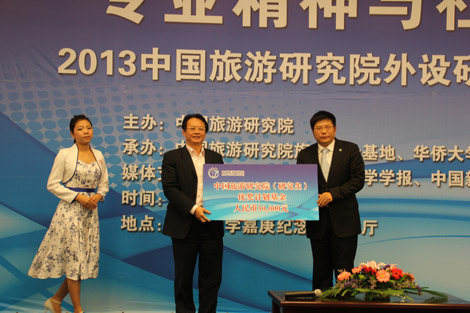
At the CTA (Graduate Student) Excellence Award Program Awarding Ceremony, Shanghai Normal University first reported the implementation status of the 2012 "CTA (Graduate Student) Excellence Award Program Fund". Dean Dai Bin awarded the "China Tourism Research Institute (Graduate Student)" to the Tourism Security Research Base ) Merit Award Scheme Fund".
The list of 12 external research institutes of China Tourism Academy: Kunming Branch, Tourism Market and Destination Marketing Research Base, Tourism Impact Research Base, Tourism Basic Theory Research Base, Hotel Industry Research Base, Tourism Safety Research Base, Wuhan Branch, Urban Tourism Research Base, Western Tourism Development Research Base, Taiwan Tourism Research Base, Tourism Vocational Education Research Base, Tourism Standardization Research Base. The list of 10 observer units: School of Tourism, Beijing Union University, Qingdao University, Guilin University of Technology, Zhejiang University, Chongqing Normal University, Jinan University, Hubei University, Xi'an International Studies University, Guilin Tourism College, Henan University.


ALL RIGHTS RESERVED:CHINA TOURISM ACADEMY (Data Center ofthe Ministry ofCulture and Tourism)
ICP备案: 京ICP备2021001490号-1


